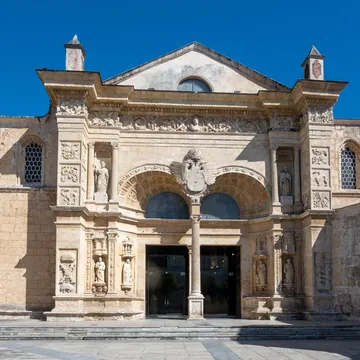
Colonial City, Santo Domingo
Casas del XVI
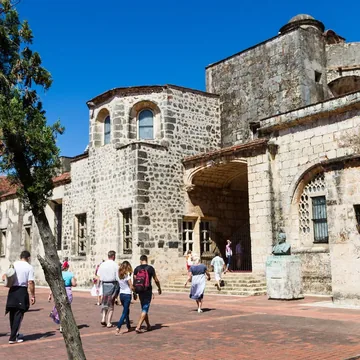
Restored 16th-century houses with private courtyards; a World Travel Awards honoree.
Discover Casas del XVI →Waterfalls near Bayaguana
Home › The Eight Shores › Santo Domingo › Monte Plata
Monte Plata · The green north of the capital
Waterfalls, river pools and the bulls of the Santo Cristo…
Monte Plata
Monte Plata, about an hour north of Santo Domingo, is the capital’s green back garden: waterfalls and river pools in the forest, cacao and Taíno-style pottery at Yamasá, and, at Bayaguana, a tradition of centuries, when the faithful bring bulls to the Santo Cristo de los Milagros every December 28.
Monte Plata is a day out from the capital: stay in Santo Domingo and drive up for the waterfalls.
Updated November 27, 2026
At a glance
Why go
Monte Plata and Bayaguana were born of an order from Spain: in 1605 and 1606 the governor Antonio de Osorio emptied the towns of the north coast to end their trade with smugglers, and moved their people here. Those from Monte Cristi and Puerto Plata founded Monte Plata, whose name joins the two; those from Bayajá and Yaguana founded Bayaguana, and with them came the devotion to a carved wooden Christ, the Santo Cristo de los Milagros, still venerated in Bayaguana today.
Today the province is the green land between the capital and Los Haitises, of cacao and citrus farms, cattle and forest, crossed by the Ozama and its rivers. Yamasá is known for its organic cacao and for the workshop of the Guillén brothers, potters who have recreated Taíno ceramics for more than thirty-five years.
Waterfalls
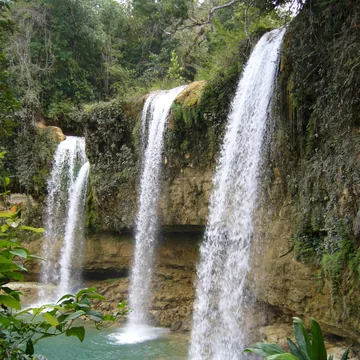
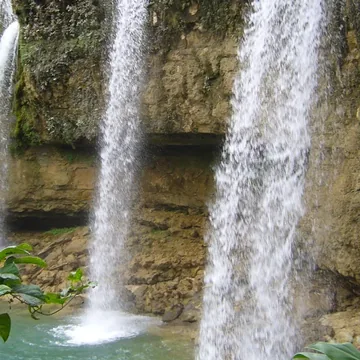
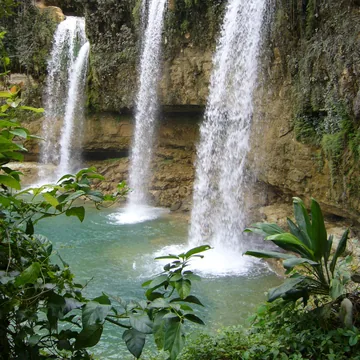
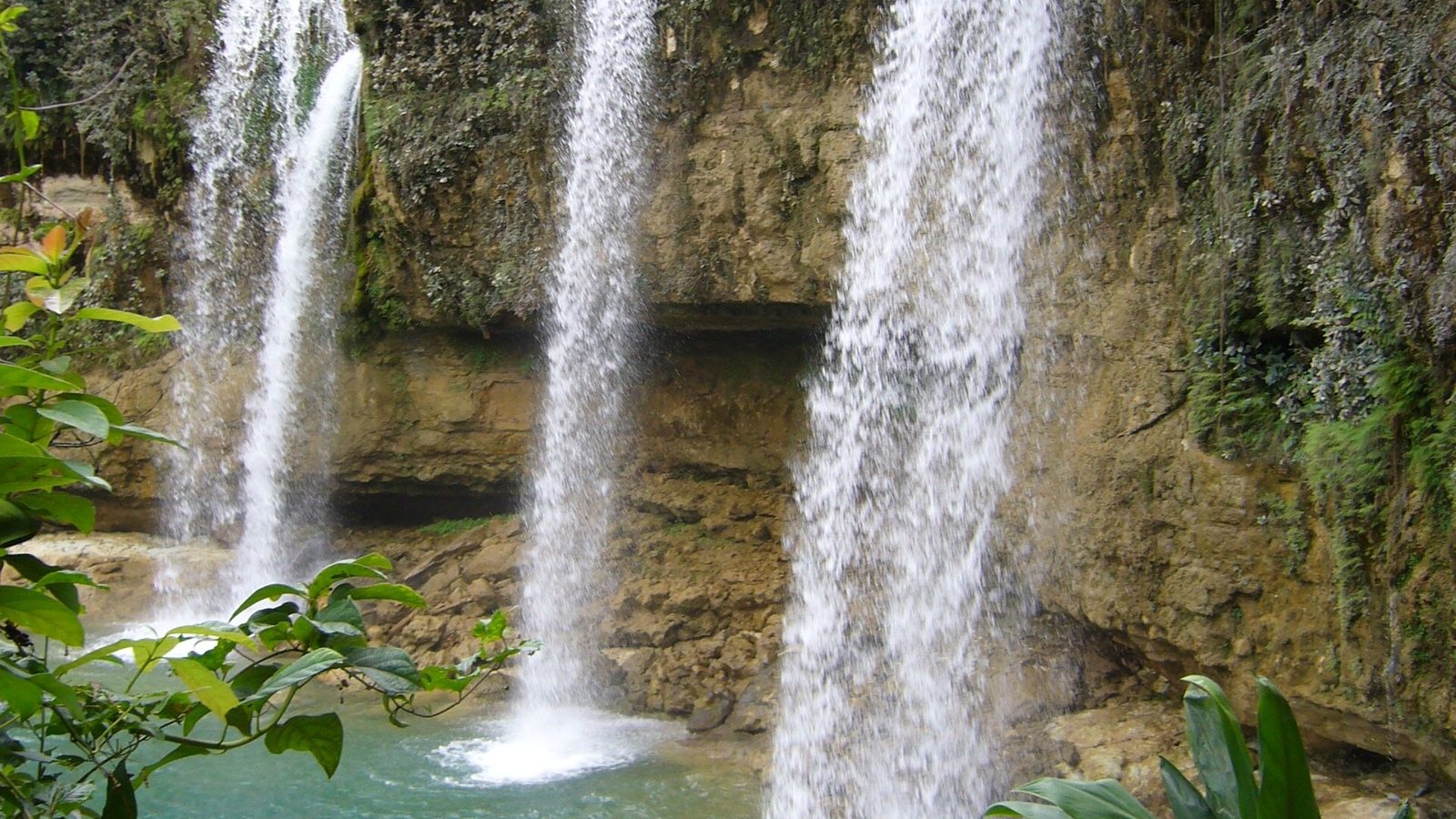
Salto de Socoa, protected as a natural monument, is a single fall into a round green pool in the forest, a few minutes off the highway to Samaná. Near Bayaguana, Salto Alto pours down in three cascades into a wide pool, and the Comate river, close to town, is Bayaguana’s favorite balneario for a swim.
Further north, near Sabana Grande de Boyá, the Salto del Doce falls in a quiet corner of the Boyá River, and the hills of Los Haitises begin.
The Santo Cristo
Every December 28, Bayaguana fills with pilgrims from all over the country. In the days before, the comisarios of the Santo Cristo ride out to the farms to gather the bulls and calves promised to the Christ; on the day they are brought into town, with riders in cowboy dress and the faithful carrying candles to the sanctuary.
Bayaguana is also where the route of the Toros de la Virgen begins: a pilgrimage of offerings that crosses Hato Mayor and ends at the Basilica of Higüey.
Where to stay
Stay in Santo Domingo, an hour to the south.
Colonial City, Santo Domingo
Restored 16th-century houses with private courtyards; a World Travel Awards honoree.
Discover Casas del XVI →Colonial City, Santo Domingo
A design hotel in the heart of the old city.
Discover Kimpton Las Mercedes →Piantini, Santo Domingo
Forbes Travel Guide Recommended 2026.
Discover JW Marriott Santo Domingo →
Places are chosen by our standard; none can pay to be listed here. Partner listings, when they appear, are clearly marked as paid.
Things to do
Monte Plata
A natural monument: one fall into a round green pool.
Near Bayaguana
Three cascades into a wide pool in the forest.
Bayaguana
The town’s river pools, a short drive away.
Bayaguana
The sanctuary of the bulls of December 28.
Yamasá
The Guillén brothers’ workshop of Taíno-style pottery.
The capital
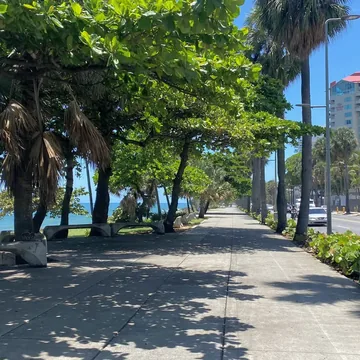
The Zona Colonial, the Malecón and the finest hotels.
Discover Santo Domingo →The calendar
Questions
North and northeast of Santo Domingo, about an hour’s drive from the capital, on the way to Los Haitises.
Salto de Socoa, a natural monument with a round green pool, and Salto Alto near Bayaguana, three cascades into a wide pool.
Pilgrims come from all over the country to the Santo Cristo de los Milagros, and the bulls and calves promised to the Christ are brought into town.
From Monte Cristi and Puerto Plata, whose people were moved here in 1606 and founded the town.
Checked November 27, 2026. Prices, dates and rules can change: confirm with each hotel, airline and official source before you travel. For entry rules, see the US State Department’s page for the Dominican Republic and the Dominican Republic’s own E-Ticket site.
Keep exploring